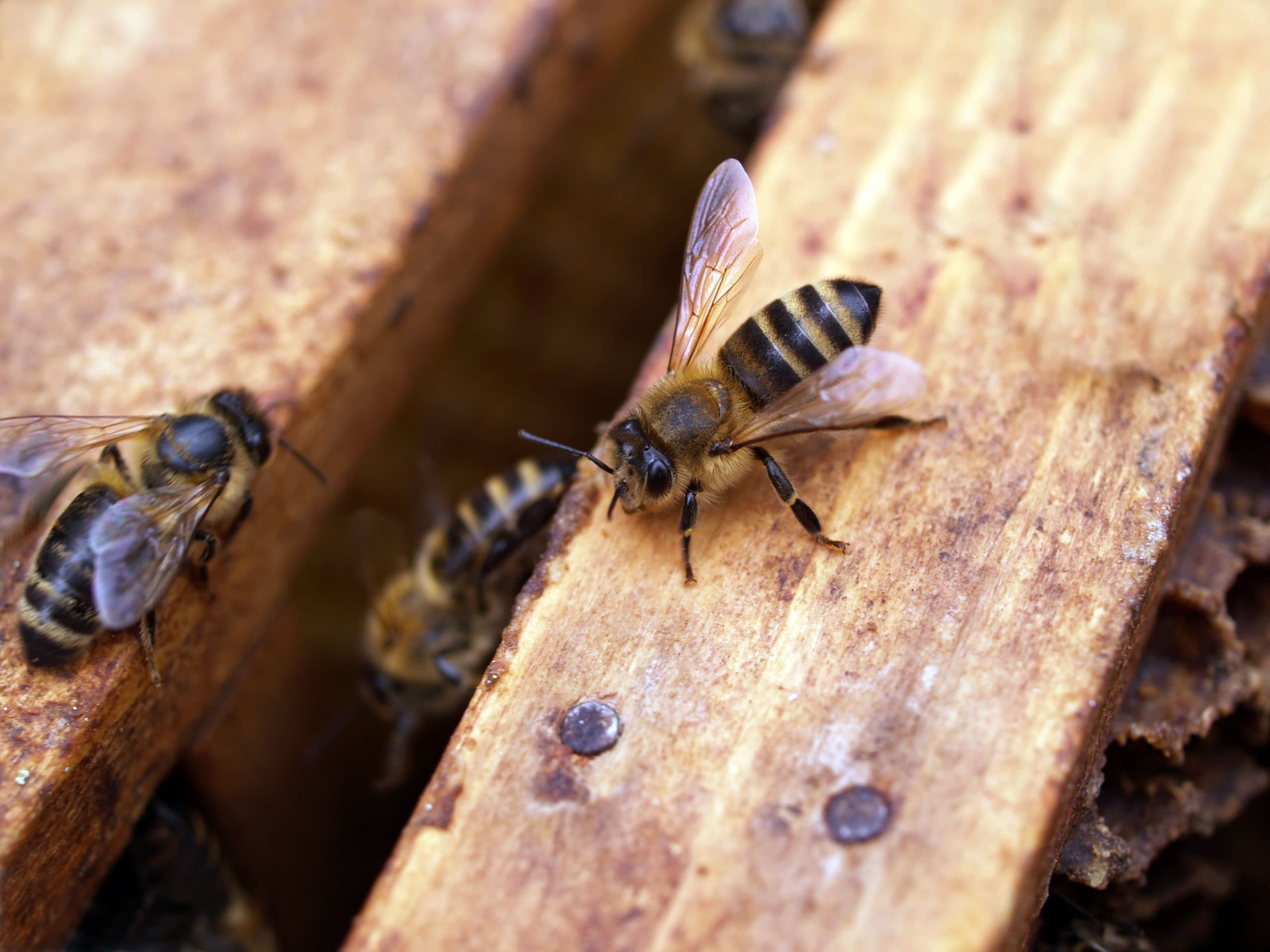
Seeing bees around flowers, lawns, ivy or garden borders is usually part of normal outdoor life. Most bees are not looking for trouble, and a few visitors in the garden can be a good sign that plants and pollinators are doing what they are meant to do.
The situation becomes more worth checking when bees keep returning to the same place. Regular movement can suggest a nest, swarm or nesting site nearby.
This article by Clear Pest Control explains what a bees nest can look like, which bee types you may be seeing, where bees commonly appear around a property, and when normal activity may become a problem.
What Does a Bee Nest Usually Mean?

Image by @James Frid
A bee nest is not always the papery, football-shaped nest many people picture when they think of wasps. Bees behave differently depending on the species. Some live in colonies, some appear in swarms, and many are solitary bees using small holes, soil, old crevices or existing cavities.
Bee pest advice from BPCA explains that there are over 200 types of bees in the UK, and different types may need different approaches. That is why identification matters before action. A temporary bumblebee nest in a bird box, a honey bee colony in a chimney and solitary bees using small wall gaps are not the same issue.
Seeing bees on flowers is usually normal foraging. Seeing bees repeatedly enter the same hole, gap or hidden space is different. That pattern can suggest nesting activity, especially if it continues over several days in the same location.
Common Types of Bees Around UK Homes
Different bees behave differently, which is why identification should come before removal. A fuzzy bumblebee nest in a bird box is not the same as a honey bee swarm on a fence, and a few solitary bees using soil are not usually a household emergency.
Bumble Bees
Bumble bees are usually rounder, furrier and more obviously “fluffy” than many other bees. They may nest in old burrows, compost heaps, bird boxes, sheds, roof spaces or hidden garden spots.
The Bumblebee Conservation Trust says bumblebee nests are usually temporary and are often best left alone where safe. If the nest is away from doors, paths, pets and children, the sensible answer may simply be to give them space until the colony finishes its natural cycle.
Honey Bees
Honey bees are often seen in larger numbers, especially when a swarm is involved. Swarm collection advice from the British Beekeepers Association explains that a honey bee swarm is usually many thousands of bees in a rugby-ball-shaped cluster, often hanging from a tree or fence.
A swarm can look dramatic, but it is not always a settled nest. Honey bee swarms may be collected and rehomed by volunteer beekeepers. Established colonies inside chimneys, walls or roof spaces need more careful advice because access, honeycomb and future prevention may all matter.
Mason Bees
Mason bees, sometimes called masonry bees, often use existing mortar gaps, brickwork holes or small crevices. They are usually solitary bees, so the activity can look busy without meaning there is one large shared nest behind the wall.
Are mason bees harmful? Usually, no. They are not interested in people and they are not chewing through sound masonry like tiny builders with bad intentions. If the mortar is already old, cracked or crumbling, the building fabric should be checked as a maintenance issue rather than blaming the bees for the whole problem.
Carpenter Bees
Carpenter bees are often mentioned online, but UK readers can easily misidentify other solitary bees as carpenter bees. Some advice online is based on species more common outside the UK, so it is worth being careful before assuming the label is correct.
In a UK home, suspected carpenter bees may turn out to be another solitary bee using an old timber hole, nearby cavity or sheltered gap. The practical point is simple: identify the insect first, then decide whether anything actually needs to be done.
Ground Bees
Ground bees are often solitary mining bees using small burrows in lawns, borders, banks or dry soil. They may leave small holes or little mounds of excavated soil, which can look more alarming than it really is.
Are ground bees dangerous? Most ground-nesting solitary bees are not aggressive when left alone, but the location matters. Activity in a quiet border is very different from activity in a nursery garden, pet run, customer entrance or narrow footpath.
Buglife’s solitary bee guidance explains that many solitary bees prefer holes and crevices, including spaces in walls, wood and soil. That is why the same property may have bee activity in several places without it all being one connected nest.
Are Bees in the Garden a Problem?
Bees in garden spaces are often doing exactly what they are supposed to do: moving between flowers, shrubs, clover, fruit trees and wild patches. The National Pollinator Strategy from GOV.UK explains that pollinating insects are vital for food production and biodiversity, so garden activity is not automatically a problem.
It becomes more useful to look closer when the activity centres on one place. Bees may be using an old burrow, a compost heap, a shed gap, a bird box, a dry bank or a patch of lawn. Bumblebee nest advice from the Bumblebee Conservation Trust says many bumblebee nests can be left alone where safe because they are temporary and do not cause structural damage.
Ground bees in lawn what to do? In many cases, the best first step is to leave the area undisturbed, avoid blocking the holes, and watch whether the activity reduces naturally. If the lawn is heavily used by children, pets or customers, it becomes more of a practical safety question than a “remove it immediately” situation.
For garden activity near a doorway, patio or shared path in Sunderland, the useful first step is still identification. A bee problem and a wasp problem can look similar from a distance, and treating the wrong one can quickly make a calm situation less calm.
Indoor Bee Activity and Nesting Signs

Image by @Orhan Namlı
Bees in house spaces are not always a sign of a nest. One bee may have come through an open window, fireplace, vent, loft hatch or delivery box. It happens. Bees do not usually book appointments.
Repeated indoor appearances are different. If bees keep turning up in the same room, near a chimney breast, window frame, ceiling, fireplace or wall, it may suggest an access point nearby. A bees nest in house areas should not be guessed at from the inside alone, especially if the activity may be coming from a wall cavity, roof void or chimney.
Bees pest control Gateshead near me can be relevant when activity keeps returning indoors, but the priority is finding where the bees are entering and what type they are. Blocking a gap while bees are active can trap insects inside the structure and may push them further into living spaces.
Check Bees in Lofts, Walls and Chimneys
Bee activity around the structure of a property needs more care than bees simply visiting flowers. The issue is not only the insect itself, but the location, the access point and whether the activity is inside a space that cannot be safely checked.
Loft Spaces
Bees in loft areas may be linked to gaps around rooflines, soffits, eaves, vents or old roof spaces. Bumble bees can sometimes use roof voids if they find a suitable existing cavity, while honey bees may require more careful assessment if a colony has settled inside the building.
Do not block the entrance while activity is live. It may seem like the obvious fix, but it can trap bees inside and make the problem harder to manage. For persistent loft activity in North Tyneside, safe identification should come before anyone decides whether removal, exclusion or simple monitoring is the right route.
Wall Cavities
Bees in wall spaces are usually noticed because insects keep entering and leaving the same gap in brickwork, mortar, pipework, vents or cladding. Signs of bees in walls can include regular movement around one opening, buzzing from a wall or ceiling, and bees appearing indoors from the same side of the property.
Solitary bee information from Buglife explains that mason bees, leafcutter bees and mining bees may use holes, crevices, walls, wood or soil. That means activity around brickwork does not always mean a large colony is hidden inside. Sometimes the bees are using small existing spaces and will move on naturally.
Chimneys
Bees in chimney areas can be confusing because the activity may be visible outside before anything appears indoors. An unused chimney, old flue or open fireplace can attract honey bee swarms or colonies, especially if there is a sheltered cavity.
Guidance from the National Bee Unit on BeeBase explains that live feral honey bee colonies in buildings can sometimes be physically extracted and relocated by professional bee removers.
What Should You Do About Bees in Soil?
Bees in soil what to do? Do not flood the holes, pour chemicals into them, block them with soil or dig them out. Soil activity is often linked to solitary mining bees, and many of these bees are seasonal visitors that can be left alone if the area is not risky.
The safer approach is to watch the pattern. Are the bees using one small patch? Is the area away from regular foot traffic? Are they entering tiny holes rather than building a visible nest? If yes, the answer may be patience rather than action.
Where soil activity is close to a commercial entrance, school setting, shared garden or public route, bees control South Tyneside should be approached as an identification and safety question first. The aim is not to disturb useful pollinators unnecessarily, but to manage risk where people cannot easily avoid the area.
Ivy Bees and Leafcutter Bees Explained
Some bee sightings cause concern because the insects appear suddenly or behave in a way people do not expect. Two examples are ivy bees and leafcutter bees, both of which can be mistaken for something more worrying.
Ivy Bees
What are ivy bees? They are solitary bees often associated with ivy flowers later in the season. They can appear in noticeable numbers when ivy is flowering, but they are usually focused on feeding and nesting rather than bothering people.
Ivy bee activity is normally more of a seasonal garden sight than a property problem. If they are outside, away from entrances and not entering the building, the best response is often to leave them alone and let the season pass.
Leafcutter Bees
Are leaf cutter bees dangerous? Not usually. Leafcutter bees are solitary bees that cut neat pieces from leaves to line their nesting spaces. The leaf cuts can look oddly perfect, as if someone has attacked the plant with a tiny craft punch.
Buglife lists leafcutter bees among the UK’s solitary bee groups, alongside mason, digger and mining bees. They may use small cavities, stems, bee hotels or other suitable spaces, but they are not normally a danger to people.
Are Bees Dangerous?

Image by @hejpetrpepa Pepa
Most bees are not looking for a fight. They are usually focused on foraging, nesting or protecting a colony if they have one. Stings can happen, especially if bees are handled, trapped, crushed, sprayed or disturbed around an active nest.
The risk becomes more important when activity is close to bedrooms, loft hatches, chimneys, doorways, play areas, pets, staff, customers or anyone with allergy concerns. In those cases, the question is not “are bees bad?” but “is this location safe and manageable?”
HSE guidance on honey bees and biocides says honey bees are not usually considered pests because of their value as pollinators, and care is needed around any treatment. That is another reason to avoid DIY sprays, smoke, foam or blocked entrances until the activity has been properly identified.
What Should You Know Before Removing a Bee Nest?
The law around bees is not as simple as “all nests must stay” or “all nests can be removed.” The useful question is not just whether a nest can be removed, but whether it should be disturbed at all. A honey bee swarm, a temporary bumblebee nest and solitary bees using soil or wall gaps can all call for different responses, so the first step is to identify the bee and check whether the location creates a real risk for people using the property.
The Wildlife and Countryside Act 1981 is useful as part of the wider UK wildlife-law context, but it should not be used to claim that every bee nest has one identical legal status. In practical terms, this means homeowners and businesses should avoid guessing, spraying or sealing an active nest before the species, location and level of risk are understood.
For honey bees, a beekeeper or specialist removal route may sometimes be more suitable than treatment. For bumblebees or solitary bees, leaving the nest alone may be the best option where it is safe. The added value is simple: correct identification helps avoid unnecessary removal, protects useful pollinators, and reduces the risk of making the activity harder to manage.
What Should You Know Before Removing a Bee Nest?
The law around bees is not as simple as “every nest must stay” or “every nest can be removed”. The useful question is not just whether a bee nest can be removed, but whether it should be disturbed at all.
Honey bees, bumble bees and solitary bees can all need different handling. A honey bee swarm may be suitable for a beekeeper route, a temporary bumble bee nest may be best left alone where safe, and solitary bees in soil or wall gaps may pass naturally without treatment.
The Wildlife and Countryside Act 1981 is useful as part of the wider UK wildlife-law context, but it should not be used to claim that every bee nest has one identical legal status. In practical terms, avoid guessing, spraying or sealing an active nest before the species, location and level of risk are understood.
Correct identification helps avoid unnecessary removal, protects useful pollinators, and reduces the risk of making the activity harder to manage.
Local Bee Advice Across the North East
Local advice can vary depending on whether the activity is a honey bee swarm, bumblebee nest, solitary bee activity or a possible wasp issue. That is why a location-based concern still needs a species-based answer.
A Sunderland council bees nest concern may lead to different guidance depending on what is actually present. If the bees are honey bees in a swarm, a beekeeper route may be suitable. If the activity is inside a wall or chimney, property access and safety become more important.
For North East homes and businesses, the best first step is usually not to disturb the bees. Take note of where they are entering, when activity is strongest, and whether they are appearing inside the building. That information helps a professional understand whether the issue is likely to pass naturally or needs closer assessment.
Clear Pest Control Support for Bee Activity
The About Clear Pest Control page explains how the company supports homes and businesses with pest management, environmental services, safe treatments, fast response, eco-responsible methods and transparent pricing.
For homes and businesses across the North East, Clear Pest Control can help where insects are entering the property, gathering around one access point, or causing concern in a high-use area.
If you are unsure whether the activity is normal bee movement or a possible nest issue, email clear photos or a short video to info@clear-pest-control.co.uk. The team can help check what you are seeing and advise whether the signs suggest a problem that needs closer attention.
FAQs
What are ivy bees?
Ivy bees are solitary bees often seen later in the year around ivy flowers. They can appear in noticeable numbers, but they are usually focused on feeding and nesting rather than causing a property problem.
Are ground bees dangerous?
Ground bees are usually not dangerous when left alone. Many are solitary mining bees, but they may need advice if they are active in a busy lawn, school area, doorway, pet space or somewhere people cannot easily avoid.
Are mason bees harmful?
Mason bees are usually not harmful. They use existing holes or crevices and are not normally aggressive. If they are appearing around damaged mortar, the wall may need maintenance, but the bees are not usually the main structural issue.
Are leaf cutter bees dangerous?
Leaf cutter bees are not usually dangerous. They are solitary bees that cut neat pieces from leaves to line their nests, which may look strange but is normally harmless.
Ground bees in lawn what to do?
Leave them alone where safe, avoid mowing directly over active holes if possible, and do not block, flood or spray the area. If the lawn is heavily used, get advice before disturbing the activity.
Bees in soil what to do?
Do not pour chemicals, water or soil into the holes. Bees in soil are often solitary nesting bees, and many can be left until activity naturally passes. Ask for help if the soil activity is in a risky or high-traffic location.